Roundtable on Solidarity Art Collections: History, Theory, Practice (Aida Bičakčić, ed.)
This ARTMargins Online roundtable is based on the roundtable on solidarity art collections held in September 2025 within the framework of the Working Group Cultures of World Socialism. It provided an opportunity to introduce art collections formed through solidarity donations that laid the foundations at the Museum of Contemporary Art (MoCA) in Skopje, the Art Gallery in Banja Luka (today the Museum of Contemporary Art of Republika Srpska), the Museo de la Solidaridad Salvador Allende, and the Ars Aevi Collection (Museum of Contemporary Art Ars Aevi) in Sarajevo.
The term “solidarity art collection” refers to art collections created in solidarity with a specific cause or movement, or to collections that aim to foster and express solidarity among people and communities. Such art collections were common during the Cold War. They are not an isolated phenomenon, even if they have only recently begun to receive sustained scholarly attention. Donation-based collections often intertwine with diplomacy, as in the case of the Non-Aligned Movement, including collections dating from the mid-1960s to the mid-1980s now located at the Museum of Contemporary Art Montenegro (previously Art Gallery Josip Broz Tito) or the Museum of Contemporary Art Koruška (Gallery for Peace).
Creating collections through private or public donations can also be part of art-activist agendas, particularly when the aim is to offset the effects of natural disasters and large-scale trauma, as in the examples of the collections in Banja Luka, Skopje, and Sarajevo, where earthquakes and war-related destruction triggered donations of art from artists and other art-world actors. The process of creating a solidarity collection takes many forms: in some cases, artists donate single works; in others, they donate entire (curated) collections. Another model, particularly prevalent in the USA and Europe, is the donation of private collections as an act of philanthropy. The social, economic, and even political context of solidarity collections is always crucial for understanding them, particularly in relation to the ethics that underlie such acts of generosity.
The participants in this roundtable reflect on the cultural and political contexts from which their donated collections emerged, the key actors involved, and the professional dilemmas and challenges currently faced by their solidarity collections. Tihomir Topuzovski asks what the legacy of solidarity collections signifies in a world of turbulence and change, especially regarding interpretation. Žena Vukićević’s contribution sheds light on the diversity of identities involved in creating the Art Gallery’s collection in Banja Luka, while María José Lemaitre’s story of the Museo de la Solidaridad Salvador Allende in Santiago de Chile testifies to resilience and political activism as central principles of the collecting process. In her contribution, Aida Bičakčić highlights concerns about the Ars Aevi Collection’s detachment from the local art scene. Participants also attend to the ideas and aspirations that underpin solidarity art collections and to their economic and socio-political background. The roundtable also aims to offer reflections on some of the main challenges facing such collections today: how to preserve them, keep them relevant, and build strong connections with their audiences.
Tihomir Topuzovski
The Museum of Contemporary Art (MoCA) Skopje was founded in 1964 and opened in 1970. It was conceived as a cultural venue reflecting the socialist promise of a better society following the catastrophic earthquake that devastated much of the city on 26 July 1963. The process of founding MoCA Skopje gained momentum in the second half of 1963. On 13 October, the Council for Education and Culture of the Assembly of the City of Skopje appointed an Initiative Committee for the establishment of a Gallery of Modern Art (later renamed the Museum of Contemporary Art). Composed of distinguished representatives from the country’s academic, cultural, and artistic communities, the Initiative Committee prepared and coordinated the steps necessary to establish the new institution. This initiative was formally institutionalized on 12 February 1964, when the Assembly of the City of Skopje adopted the decision to establish the Museum of Contemporary Art. The founding act defined the Museum’s principal objectives, including the continuous development of visual culture; the collection, preservation, and study of art and its documentation; the promotion of research; the systematic presentation of its collections alongside current developments in contemporary art; the organization of scholarly, thematic, and retrospective exhibitions; and the advancement of other artistic disciplines through educational programs and collaborative initiatives.

The Museum of Contemporary Art, Skopje (MoCA). Architects Wacław Kłyszewski, Jerzy Mokrzyński, and Eugeniusz Wierzbicki, 1970. Photo courtesy of MoCA.
The vision for rebuilding the city after the devastating earthquake included a new museum of contemporary art, encouraged by international solidarity, as artists donated numerous works that would form the core of the museum’s collection. This momentum grew from reconstruction efforts by the international community and Yugoslav society. Constructed in 1970, the Museum of Contemporary Art was conceived as a distinctive architectural and cultural space symbolizing global solidarity with the reconstruction of Skopje. The project’s modernity is evident in its versatile functionality: beyond exhibition galleries, the building offers poetry and music recitals, workshops, and educational activities, as well as spaces for lect film screenings, creating forums for dialogue and the exchange of knowledge.
Key early donors to the collection included the Italian painter Giuseppe Santomaso, the German graphic artist HAP Grieshaber, and the Montenegrin Serbian artist Petar Lubarda, who donated all the works from his 1963 solo exhibition in Niš. The International Association of Art further strengthened the collection by appealing to its members for contributions. Subsequent gifts came from prominent artists such as Victor Vasarely, Bernard Buffet, Alexander Calder, Anna-Eva Bergman, Pablo Picasso, David Hockney, Niki de Saint Phalle, Wifredo Lam, Hans Hartung, Jasper Johns, Christo, and Marino Tartaglia. The collection also includes important works by former Yugoslav and Macedonian artists, including Dušan Otasević, Petar Hadži Boskov, Jordan Grabul, Dushan Percinkov, Aneta Svetieva, whose presence anchors the museum’s regional and post-socialist narratives. This regional component is crucial for situating the solidarity collection within local histories of modernism, socialism, and post-1990 transformations.
Still decades later, artists who exhibited or collaborated with the museum continued to donate their work, thereby extending the institution’s founding ethos into subsequent historical periods. These acts of giving were not merely additive gestures of collection building, but forms of symbolic affiliation that reaffirmed the museum as a site of artistic exchange, mutual recognition, and shared cultural responsibility. This enduring spirit of solidarity has driven the collection’s expansion from its origins to more than 5,300 artworks today, encompassing diverse artistic movements, practices, and contexts.
What does the legacy of the solidarity collection mean for the role of museums in representing and engaging with their audiences today, as we face political turmoil and war crises, as a growing number of people have been forced to leave their homes or are exposed to various forms of exploitation, and as we confront the complexities of environmental challenges and climate change? Alongside its collection, MOCA Skopje’s recent projects have sought to address solidarity in a broader context, responding to urgent social and environmental crises through exhibitions and participatory initiatives grounded in solidarity. For example, the exhibition War of the Sense (2024) examined how digital technologies shape the production and interpretation of wartime images and evidence in ongoing war zones and conflicts.

War of the Sense, Exhibition at the Museum of Contemporary Art, Skopje, 2024. Photo courtesy of MoCA.
Ibrahim Mahama’s 2025 installation, exhibited on the museum’s walls, featured over a thousand jute bags that traced histories of labor, trade, and migratiton, exposing globalization, exploitation, and inequality. The Earth Is Thinking All Along (2024–2025) reframes geological and ecological processes as forms of “thinking,” expanding ethical responsibility toward land, water, and biodiversity.
How can solidarity be reimagined today? One way to approach this question is through the exhibition No Feeling Is Final. The Skopje Solidarity Collection, first shown at Kunsthalle Wien in 2023 and later presented at the National Gallery in Prague in 2024, brought works from the MoCA collection into dialogue with newly produced artworks. This created synergy between existing and contemporary pieces and explored how the collection can generate new relations, ideas, and meanings. The project demonstrated the potential of the MoCA collection for exhibitions that renew perceptions of solidarity and expand our idea of what solidarity might mean today. Rather than treating the Solidarity Collection as a static archive, the project activated it as a living resource for rethinking solidarity in the present. By bringing MoCA works into dialogue with newly produced artworks, the exhibition showed how the collection can produce new relations among works and meanings, particularly across geopolitical divides.
Something particularly significant occurred during the official opening, at which I was present. The ceremony was interrupted by a mass demonstration in which protesters entered the space and disrupted the event, shouting slogans calling for an immediate ceasefire in the Middle East. What was striking was that these demonstrations could be read as an appeal for solidarity grounded in the protesters’ lived experience. From a theoretical perspective, such moments, in a certain sense, correspond to Jacques Rancière’s notion of dissensus. They open a space for considering how these activities disturb the ordinary regime of institutions and compel us to rethink solidarity. As Rancière defines it, dissensus is “a form of dissensual reconfiguration of the common experience of the sensible.” Such moments are important because they produce “a sensory form of strangeness, a clash of heterogeneous elements provoking a rupture in the way of seeing and, therewith, an examination of the cause of that oddity.” They also open the possibility of understanding these practices as disturbing “the ordinary regime of that connection such as it is employed in the official system of information.”(Jacques Rancière, The Emancipated Spectator (London: Verso, 2009), 95) To me, the interruption during the opening of the exhibition on solidarity showed how a real-life situation can challenge institutional norms and make previously invisible struggles visible in debates on solidarity. Such acts can foster bonds of solidarity and, in doing so, galvanize the Museum of Contemporary Art in Skopje’s founding idea.
Žana Vukičević
Two museums established in the former Socialist Federal Republic of Yugoslavia through humanitarian acts of support for cities affected by catastrophic events serve as mementos of socialist solidarity: The Museum of Contemporary Art in Skopje, founded after the 1963 earthquake, and the Art Gallery in Banja Luka, today’s Museum of Contemporary Art Republika Srpska, which was founded after the 1969 earthquake. At the time, these actions provided much-needed aid to communities in distress and made an immeasurable contribution to reviving the human spirit and restoring a culturally rich normal life. They demonstrated how, through concerted effort, tragedy can paradoxically lay the groundwork for a better future. From their inception to the present, both museums have served as the nucleus of their communities’ art life. Their representative collections of 20th-century domestic and European art, built through donations made as part of mutual aid efforts, have kept these grand gestures engraved in the collective memory of people living in the former Yugoslav region.
The formation of the Art Gallery in Banja Luka in 1971 played an important role in the city’s cultural reawakening, which gradually took place throughout the 1960s and especially the 1970s. The city already had an active Culture Hall (today’s Viceroy Palace Cultural Center), but people felt the need to open a gallery whose activities would keep pace with the art scene’s ever-increasing development. This institution emerged from the gracious gesture of fine artists from the former Yugoslavia, who, followed by artists from other parts of the world, decided to support the city by donating works of art after the October 27, 1969 earthquake. Mutual aid by artists from Yugoslavia and around the world led to the acquisition of around 750 artworks, laying the foundation for the Art Gallery and becoming its core collection.
The solidarity action, launched by the Association of Yugoslav Artists (SLUJ) and the Association of Artists of Bosnia and Herzegovina (ULUBiH), began in earnest in the days immediately after the earthquake, and the Gallery continued to receive donated works of art for the same purpose in the years that followed. From today’s perspective, the scale and speed of the donations are astounding. Just a month after the catastrophe, on November 29, 1969, more than 200 works from the first wave of donations were displayed at the newly opened Skenderija Hall in Sarajevo. The exhibition organizers had a brilliant idea: the donated works could be shown alongside the world premiere of the movie The Battle of the River Neretva on Republic Day and sold to raise funds for the destroyed city and its citizens, capitalizing on the attendance of Yugoslav president Josip Broz Tito together with other top officials and distinguished guests from abroad.

Josip Broz Tito attends the exhibition of the works donated as part of the Banja Luka earthquake solidarity action, November 29, 1969. Photo courtesy of MoCARS.
However, the idea of a sale was soon rejected as awareness grew of the collected works’ cultural value and their far greater importance as permanent holdings of a gallery to be established in Banja Luka. During his visit to this unique solidarity exhibition, Tito said he was convinced that many more local and foreign artists would join the solidarity action. Soon afterward, and thanks to the efforts of foreign embassies in Yugoslavia and Yugoslav artists living and working abroad, artworks began arriving from Austria, the German Federal Republic, Italy, Belgium, France, Switzerland, Norway, Bulgaria, Hungary, Turkey, India, Iraq, Mexico and Cambodia.
Thanks to the enthusiastic response of Yugoslav artists who donated major works from their newest series to Banja Luka, today, the collection of the Museum of Contemporary Art Republika Srpska (MSURS) includes many paintings and prints created in Bosnia and Herzegovina and the former Socialist Federal Republic of Yugoslavia during the second half of the 20th century. The collection features works by such renowned artists as Milan Konjović, Petar Lubarda, Mica Todorović, Ljubica Cuca Sokić, Mića Popović, Vera Božičković Popović, Petar Omčikus, Kosa Bokšan, Mihailо S. Petrov, Ljubo Ivančić, Franjo Likar, Nives Kavurić Kurtović, Frano Šimunović, Miroslav Šutej, Vojo Dimitrijević, Tomislav Dugonjić, Bekir Misirlić, Kemal Širbegović, Dževad Hozo, and many more.
Artworks in the museum’s collection also include luminokinetic objects by Group Zero, one of the most significant and influential art movements of the second half of the 20th century. The founders and key members of this international group, German artists Heinz Mack, Otto Piene, and Günther Uecker, focused on space, movement, and light as art’s principal elements. They are regarded as pioneers of kinetic, optical, and light art. Thanks to a generous gift from the government of the Federal Republic of Germany, MSURS holds three other works by the group: Rotors (Mack, 1971), Light Ballet for Banja Luka (Piene, c. 1970), and Light Plate (Uecker, 1972).

Otto Piene (GROUP ZERO), Light Ballet for Banja Luka (luminokinetic object, 1971). MoCARS collection. Photo: Nemanja Mićević. Photo courtesy of MoCARS Documentation.

Heinz Mack (ZERO GROUP), Five Small Rotor (luminokinetic object, 1971). Photo: Nemanja Mićević. Photo courtesy of MoCARS.
As a gesture of solidarity, Austrian visual artist and architect Friedensreich Hundertwasser donated one of his prints, Crusade of the Crossroaders (from his Regentag portfolio), after holding a solo exhibition at the Stone Building at Banja Luka’s Fort Kastel in 1975. Many gifts carried special dedications of support to “Yugoslav friends”, including the inscription on the back of Italian artist Gastone Biggi’s painting Continuo 86: “PER GLI AMICI JUGOSLAVI”. The painting is now one of the symbols of the historical solidarity campaign. Meanwhile, artworks presented by Italian artists Antonino Virduzzo, Claudio Verna, Francesco Guerrieri, and Lia Drei, as well as Belgian artist Jo Delahaut and Norwegian artist Herman Hebler, illustrate explorations in optical art, analytical painting, and geometric abstraction during the 1960s and 1970s.
The largest donation, 103 paintings, prints, and sculptures, came to the Art Gallery in 1971. This donation by the Hungarian People’s Republic brought major works of the late-1960s Hungarian neo-avant-garde into the MSURS collection, including works by members of the IPARTERV generation, also known as the “third generation of the Hungarian avant-garde.” Its representatives—Imre Bak, János Fajó, István Nádler, and Ilona Keserü—embraced innovative trends in geometric and optical art. In doing so, they opposed state-sanctioned art, which leaned toward social realism, as well as the control exerted over art by the country’s single-party regime. As a result, authorities banned and censored their work. By contrast, Eastern Bloc art created during the same period in the spirit of social realism was represented in this donation by industrial landscapes painted by Bulgarian artists Georgi Dimitrov Baev, Lyuben Todorov Gaydarov, Vladimir Petrov Kavaldjiev, Todor Borisov Hadjinikolov, and others. The 1971 canvas Winter Holiday by another Bulgarian artist, Radi Nedelchev, exemplifies naïve painting and humorous symbolism. Its scenes of country life express the artist’s protest against Bulgaria’s industrialization. Turkish art of the 1970s and 1980s was represented by works by artists trained at the Istanbul Art Academy: Ferruh Başağa, Sabri Fetah Berkel, Devrim Erbil, Mustafa Esirkuş, Nasip Iyem, and Azra İnal. Committed to exploring abstraction and art informel, these artists pioneered modernism in Turkey and helped bring it onto the international art scene.(Lidija Merenik, ‘Punktumi: Zbirka inostrane umjetnosti Muzeja savremene umjetnosti Republike Srpske’ in Punktumi: Zbirka inostrane umjetnosti Muzeja savremene umjetnosti Republike Srpske,, Muzej savremene umjetnosti Republike Srpske, Banja Luka, 2018, pp. 15–25)
The devastation caused by the Banja Luka earthquake and humanity’s triumph, demonstrated through solidarity, created an extraordinary intertwining of life and art, deeply embedded in the MSURS collection and its activities over the past decades. Collective gestures of goodwill—in this case, donations of artworks—transcended ethnic, national, religious, racial, and class differences, overcame local geographic boundaries, and reached global proportions. Today, viewed sixty years later and from the social, political, and ideological context of divided nation-states—so different from that of the now-defunct socialist state—this phenomenon seems like a reflection of a long-past zeitgeist. Given the current state of affairs, its return to the former Yugoslav region seems highly unlikely. Moreover, the benevolent practice of expressing solidarity with others through artwork donations stands in sharp contrast to the fact that a significant portion of the world’s cultural heritage is today gravely endangered, damaged, or even destroyed by war and other geopolitical events. Ultimately, the question is: Are solidarity efforts like this merely anachronisms in today’s capitalist society, or can good examples from the past still teach humanity today?
María José Lemaitre
The magnitude of Santiago de Chile’s Museo de la Solidaridad’s project, along with its values and current perspectives, requires telling its story, rooted in a broad international network of artistic and affective connections. The museum was founded in 1971 with the mission of serving as a modern, experimental art museum for the “people of Chile”. Its collection was formed through donations of works by international artists as part of a solidarity movement that viewed Salvador Allende’s government—the first democratically elected socialist government in the world—as a unique and unprecedented opportunity. It was a time of enthusiasm and collaboration, when culture played a fundamental role in domestic politics.

Museo de la Solidaridad, Chile (exhibition poster). Donation by the artists of the world to the Gobierno Popular, Museo de Arte Contemporáneo Quinta Normal, Santiago, Chile, 1972. Photo courtesy of MSSA.
The spirit its founders gave it differed from the traditional conception of a museum. They sought to abandon the elitist stance of hegemonic culture, aiming to bring the visual arts closer to the Latin American people in a living way, with cultural, experimental, and educational purposes. A museum capable of responding to the needs of a new society, to advance the integration of the arts with life.
The idea of creating an international art collection for Chile, donated by artists, emerged during the political and cultural initiative called Operación Verdad (Operation Truth, 1971). Promoted by Salvador Allende’s government, the initiative responded to the misinformation campaign led by the national and foreign press and brought together international intellectuals, artists, and journalists, who were invited to see firsthand the policies and transformations underway. Among them were the Spanish art critic José María Moreno Galván and the Italian politician and artist Carlo Levi, who, together with the Spanish artist living in Santiago, José Balmes, presented to Allende the idea of creating an international art collection for the people of Chile.
To carry out this idea, they contacted Mário Pedrosa, a Brazilian art critic exiled in Chile, a member of the International Association of Art Critics (AICA), and a researcher at the Universidad de Chile’s Instituto de Arte Latinoamericano (IAL). Pedrosa’s first action, alongside his cultural advisor and friend, the Uruguayan filmmaker Danilo Trelles, was to form, under the IAL, the Comité Internacional de Solidaridad Artística con Chile (CISAC), comprising curators, art critics, and museum professionals from the Americas and Europe.
The committee was initially composed of Moreno Galván and Levi; Louis Aragon and Giulio Carlo Argan (Italy); Dore Ashton (USA); Rafael Alberti (Spain); Edy de Wilde (Netherlands); Jean Leymaire (France); Mariano Rodríguez (Cuba); Aldo Pellegrini (Argentina); and Julius Starzynski (Poland). Later, Roland Penrose (United Kingdom), Harald Szeemann (Switzerland), and Xavier-Andrés Flores (Chile) joined. According to the invitation sent by Pedrosa to the members of CISAC, the mission of the group was: to decide on the best way of contacting the artists, who are congenial with the revolutionary experience of the Popular Government, and who are disposed to cooperate with their works to form a collection of masterpieces from the 20th century, destined to permit the participation of the underdeveloped countries in the international and artistic patrimony.“(Carta de invitación,” January 1972, Archivo MSSA)
During this period, works by Joan Miró, Victor Vasarely, Lygia Clark, Alexander Calder, Frank Stella, Antonio Berni, Myra Landau, Taller de Gráfica Popular, among many others, arrived in Santiago. In just two years, the group gathered and donated more than 650 works, sent by air and sea from Argentina, Cuba, Spain, France, the United States, Italy, Mexico, Poland, Japan, and Uruguay. Without legal status or a permanent venue, the Museo de la Solidaridad was officially inaugurated in May 1972 at the Museo de Arte Contemporáneo (MAC), with Salvador Allende in attendance. After its inauguration, two exhibitions opened simultaneously in April 1973. One was held at MAC, and the other at the Centro Cultural Gabriela Mistral, a building built for UNCTAD III, held in Santiago in April 1972, Metropolitano G.
After the civil-military coup on September 11, 1973, led by Augusto Pinochet, the founders who had brought the museum to life went into exile, and most of the donated works were sent to storage, while others disappeared. However, those who believed the museum had ended were mistaken. Two years later, in April 1975, despite multiple difficulties, its museological project was rearticulated from Cuba and France under the name Museo Internacional de la Resistencia Salvador Allende (MIRSA). A General Secretariat was established in Havana, with those founders of the Museo de la Solidaridad that were based in the Cuban capital, including Mário Pedrosa as President, Miguel Rojas Mix, José Balmes, Pedro Miras, and Miria Contreras (Payita). Miria Contreras (Payita) served as Executive Secretary, with support from the cultural institute Casa de las Américas.

Group portrait of MIRSA collaborators in Avignon, July 16, 1977. From left to right (only identifiable individuals): Julio Cortázar, Pilar Fontecilla, Dominique Taddei, Isabel Ropert, Miria Contreras, Carmen Waugh, Jack Lang, Aníbal Palma, and Monique Buczynski. Photo courtesy of MSSA.
As indicated in the circular sent by the Secretariat to announce the opening of MIRSA, the call for the new phase of the museum would be: “For all artists who feel solidarity with the cause of the Chilean people. By donating works, they may: help the Chilean resistance [sic]; give direct testimony of the solidarity of intellectuals; and help create a political instrument of agitation and propaganda.”(Document, “Salvador Allende International Museum of the Resistance”, approx. 1976, Havana, MSSA Archive.) Even though MIRSA operated abroad for fifteen years without a permanent venue or stable budgets, it managed—again through donations—to build an essential collection of more than 1,100 works gathered across 10 countries: Algeria, Colombia, Cuba, Finland, France, Mexico, Panama, Poland, Spain, and Sweden. Artists who stand out in this group include Joan Miró, Gontran Guanaes Netto, Olga de Amaral, Carlos Cruz-Diez, Alexander Calder, Leif Bolter, José Gamarra, Wifredo Lam, Julio Le Parc, Natalia Lach-Lachowicz, and the Chileans Roberto Matta and Gracia Barrios.

Photographic documentation of the creation of a mural by the Finnish Painting Brigade for the MIRSA exhibition at Helsingin Taidehalli, January 5–28, 1979. From left to right: [not identified], Héctor Wistuba, Marika Mäkelä, Hernando León. Photo courtesy of MSSA.
To grasp the global scope the Museum achieved during those years, note other similar projects inspired by it, created to show solidarity or resistance with their respective countries, communities, and territories. The first was the International Exhibition of Art in Solidarity with Palestine (1978), led by French artist Claude Lazar, who had been actively involved in MIRSA from France; the collection “Art for the People of Nicaragua” (1981), promoted by writer Julio Cortázar and organized by Chilean Carmen Waugh; and the collection “Art Against/Contre Apartheid” (1983), encouraged by Spanish artist Antonio Saura and French artist Ernest Pignon-Ernest, both of whom were also donors to our museum. Of these solidarity projects, only the Museum of Solidarity remains active.
In 1991, with the return of democracy to Chile, the works donated during exile returned to the country, reuniting them with the collection donated in the early ‘70s to the Museo de la Solidaridad. This act marked the beginning of the third phase of the Museum as we know it today: the Museo de la Solidaridad Salvador Allende (MSSA). The Museum launched a new call for donations, especially for Chilean artists, and actively circulated its collection across the country.
As Mário Pedrosa stated in the Museum’s early years, this project had to be encouraged so that art could gradually integrate into daily life, understood as an “experimental exercise of freedom” that connects the inside with the outside and fulfills the social function of awakening people’s sensitivity, allowing them to discover new ways of knowing and relating to the world. In the same vein, the Museum was conceived as a progressive and experimental space and it remains so today, a laboratory of experiences for art professionals, workers, and families, while its collection continues to grow through acts of solidarity.
This vision, inherited from the 1970s, has guided the museum’s path and helped us navigate social demands and the harsh realities of our current world. This was evident during the 2019 social uprising in Chile, when the museum opened its doors and became a large public square for reflective gatherings on timely social issues, such as the new constitution, care work, and the environment. It was also evident during the 2020 pandemic, when the institution made itself available to different communities for food preparation and distribution while taking its artistic programming into the digital realm.
Based on these experiences, the MSSA is understood today as a para-museum: a living, open, permeable space that facilitates experiences, a place for citizen and democratic encounters, and a dynamic platform of constant questioning, dialogue, and transformation. It seeks to develop collaborative, transdisciplinary, and interdisciplinary work—both with its own teams of collaborators, including artists, curators, researchers, and with neighborhood communities—where each contributes their unique experience and perspective. In that context, the museum’s collection, now expanded to include its valuable archive, is part of those new readings, reflections, and tensions, reinforcing the idea that art is political, social, and affective.
Aida Bičakčić
Solidarity collections were a prominent feature of the Yugoslav art system. For example, the Museum of Modern and Contemporary Art Koroška in Slovenia relied heavily on donations from artists who participated in exhibitions held under the auspices of the United Nations between 1967 and 1975. These contributions led to the creation of the Gallery for Peace, a space representing “the ideas of peace, solidarity, and humanism through art.”(Katarina Hergold, Andreja Hribernik, Natalija Vujošević, Anita Ćulafić, Marina Čelebić, Nada Baković, Introduction in: Collection for a Solidary Future (cat., Korška galerija likovnih umetnosti, 2023), 15). The principles embodied by the Gallery for Peace resonated in the 1994 statement of support for Sarajevo, signed by a group of Slovenian artists, art historians, and intellectuals. One of the most significant manifestations of this support was the exhibition For the Museum of Free Art Sarajevo 2000–Ljubljana Collection, produced by Moderna Galerija Ljubljana in 1996 and curated by the Slovenian curator Zdenka Badovinac. In her curatorial text, Badovinac framed the collection as an inquiry into the role of contemporary art and the art system when confronted with war and the destruction it brings.

Ars Aevi Collection at the Museum of Revolution/History Museum of Bosnia and Herzegovina in early 2000. Photo courtesy of Museum of Contemporary Art Ars Aevi/City Museum of Sarajevo.
The Ars Aevi Collection emerged from the cultural project Sarajevo 2000 and was conceptually driven by resistance to the destruction of the city’s urban fabric. The image of this once-vibrant Olympic city, now in flames and under military siege, motivated the art world to act, believing “that art could be the initial, indispensable vehicle for the citizenry of Sarajevo to express and reestablish its inherent cultural life…”(Bruno Corà, Ars Aevi 2000 in: Ars Aevi 2000, Dieci artisti internazionali (cat., Prato: Centro per l’Arte Contemporanea, 1996), 19) To understand the roots of the Sarajevo 2000/Ars Aevi Collection, one must go back to the years before the collapse of Yugoslavia and the exhibitions titled Yugoslav Documents (1987; 1989). These large-scale exhibitions brought together curators and artists from all parts of Yugoslavia to Sarajevo. As noted at the time, these were the most extensive exhibitions of contemporary art held in the country in fifteen years, gathering contributions by 129 artists exhibited across a space larger than 4,000 square meters.”(Zorica Vlači, “Jugoslovenska dokumenta ‘87”. Oslobođenje, May 12, 1987, 8) Sarajevo 2000’s social infrastructure, connections, and the very idea of a museum of contemporary art are rooted in Yugoslav Documents.
Developed in exile but guided by a strong network of Bosnian intellectuals, artists, and prominent political figures, the project was formally introduced in the March 1993 Promotional Catalogue. Within the framework of the International Cultural Project Sarajevo 2000: General Concept, three basic activities were outlined: continuing the Sarajevo Biennial of Contemporary Art (Jugoslovenska Dokumenta); establishing a Museum of Modern Art in Sarajevo; and exchanging national exhibitions of contemporary art. This was followed by an invitation to artists and cultural workers worldwide, as well as other relevant actors, to join the network of founders of the International Cultural Project Sarajevo 2000.(Enver Hadžiomerspahić, ed., International Cultural Project Sarajevo 2000 General Concept, cat. (Promotion Catalogue Sarajevo 2000 Museum of Modern Art, 1993), 21)
Crucial to the formation of the Ars Aevi Collection were the efforts by curators and their parent institutions—museums, galleries, and foundations—to engage with artists (or, in some cases, their representing galleries), resulting in a collection of about 150 works organized into ten sub-collections created between 1994 and 2012, each shaped by a distinct curatorial inquiry.(The Bolognano Collection, curated by Lucrezia De Domizio Durini, was published as part of the Ars Aevi Collection in the catalog Ars Aevi Collection: Museum of Contemporary Art (2006). However, the collection was never physically transferred, except for works by Joseph Beuys and Marco Bagnoli previously donated through the Open Space Collection) The collection was launched in 1994 by curator Enrico R. Comi, with a program of exhibitions featuring international artists at his Milan Spazio Umano Contemporary Art Center. The artists were invited to donate their work to the Permanent Collection of the Museum of Contemporary Art Sarajevo, Enrico R. Comi – Spazio Umano Project. Michelangelo Pistoletto was the first to respond.
Other curatorial projects and exhibitions were also conceived as donations to Ars Aevi, forming sub-collections. In 1996, Bruno Corà curated Ars Aevi 2000: Dieci artisti internazionali – Prato Collection under the auspices of the Centro per l’arte contemporanea Luigi Pecci (Corà also coined the acronym Ars Aevi, which means “art of the epoch,” which would later become the project’s official name).(Bruno Corà, Ars Aevi 2000: Dieci artisti internazionali, Skira Editore, 1996) In 1997, Chiara Bertola curated the exhibition Artisti per Sarajevo (Sarajevo progetto culturale internazionale museo d’arte contemporanea Sarajevo 2000, the Venice collection, produced by Bevilacqua La Masa Foundation and the Querini Stampalia Foundation. In her curatorial text, Bertola emphasized solidarity as a response to the “hard and brutal siege,”(Chiara Bertola, Chiara Bertola, Sarajevo progetto culturale internazionale museo d arte contemporanea Sarajevo 2000: Artisti per Sarajevo (Arsenale Editrice Venezia, 1997), 21.Sarajevo progetto culturale internazionale museo d arte contemporanea Sarajevo 2000: Artisti per Sarajevo (Arsenale Editrice Venezia, 1997), 21.) while also questioning how art, in all its expressive diversity, can be accommodated within a fixed space.(Bertola, 1997, 22)

Museum of Contemporary Art Ars Aevi: Daniel Buren La Place des drapeaux, 1996, 2026. Photo courtesy of Aida Bičakčić, private collection.
The Sarajevo Collection, curated by Izeta Građević and produced by Obala Art Center (Obala Gallery), was the first Sarajevo-born collection donated to Ars Aevi, which until then had been entirely composed of international art. The Collection consists of the artworks presented in solo exhibitions produced in the besieged city between 1994 and 1997 (Christian Boltanski, Edin Numankadić, Nusret Pašić, Mustafa Skopljak). The Open Space Collection, consisting of five curatorial projects (a series of solo exhibitions) by international and Bosnian curators between 1994 and 2001, followed.
Lóránd Hegyi curated the Sarajevo 2000 exhibition entitled The Wien Collection, which was produced by the Museum moderner Kunst Stiftung Ludwig Vienna in 1998. In his text, The Challenge of a Site, to Overcome the Discrepancy Between Centers and Peripheries,(Lóránd Hegyi, ed. Sarajevo 2000: SARAJEVO – the Challenge of a Site to Overcome the Discrepancy Between Centers and Peripheries (Wien: Museum moderner Kunst Stiftung Ludwig Wien, 1998), 11) the author foregrounds the enduring curatorial question of the center–periphery relationship, framing Sarajevo as a central locus of the discussion.(Hegyi, SARAJEVO – the Challenge of a Site, 25)
Following the question of the center–periphery relationship, the Rendez-Vous project (2001 to 2006) was conceived, resulting in a new collection under the same name. In selecting artists and their works, the curators—who had previously built individual collections—focused on the new generation of Bosnian artists, particularly those inclined toward socially engaged art, such as Damir Nikšić, Šejla Kamerić, Maja Bajević, Anela Šabić, and Anur Hadžiomerović. The curatorial selection for the small-scale exhibition projects within the Rendez-Vous Collection comprises works by both Bosnian and international artists, thereby dissolving the divide between European centers and so-called peripheral art.(Enver Hadžiomerspahić, ed., Museum of Contemporary Art Sarajevo: Collection Sarajevo Open Space, coll. cat. (Firenze, Prato: International Project Ars Aevi Museum/Center of Contemporary Art Sarajevo General Direction Ars Aevi, 2002), 280-321)
In local discourse, critical engagement with the Ars Aevi Collection remains limited, while interpretations based in narrative have become dominant.(Silvia Maria Carolo, “Narrating Ars Aevi: Re-envisioning and Re-shaping the Contemporary Art Museum of Sarajevo in Urban Space,” MA, University Ca’ Foscari Venezia, 2015-2016) These interpretations often come with inflated expectations, rooted in a partial understanding of the post-war context, in which international actors have tended to appropriate and invalidate the discourse of multiculturalism. Clearly, Bosnia and Herzegovina, and Sarajevo in particular, need a contemporary art museum.(Edin Hajdarpašić, “Europe in the New Millennium Museums, Multiculturalism, and the Remaking of Postwar Sarajevo” in (Re)visualizing National History: Museums and National Identities, ed. Robina Ostowa (University of Toronto Press, 2008), 129-130) For a museum founded on a solidarity-based collection to remain relevant, it must foster critical scholarship, engage actively with the local art scene—including curators and artists—and cultivate authenticity through grassroots practices. In art-historical discourse, Ars Aevi is seen as responding to the crisis of culture and art in Bosnia and Herzegovina, and such responsiveness should inform and critically guide future engagements with the Collection, particularly now that it has been institutionalized and is awaiting the completion of its museum building.
Aida Bičakčić
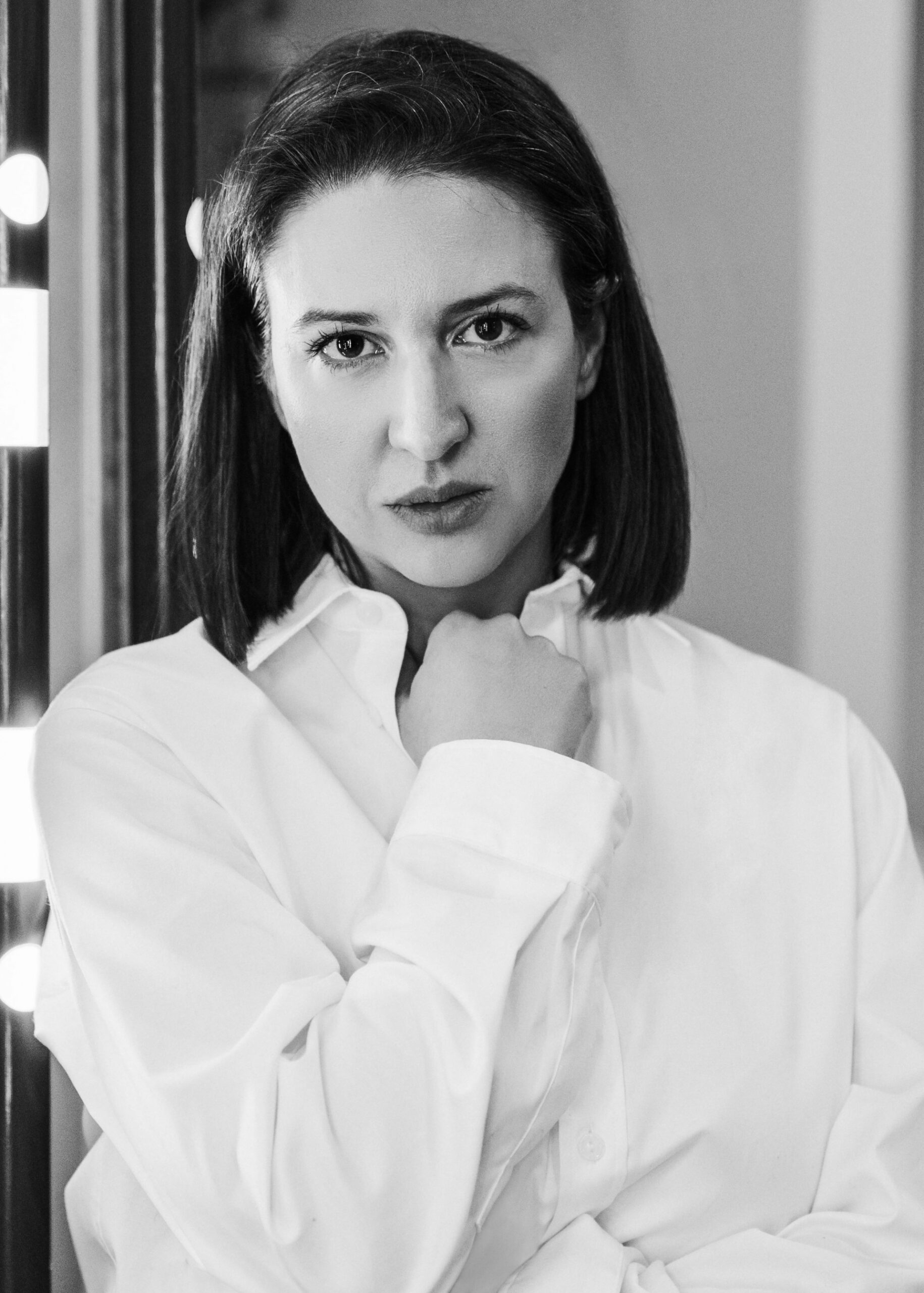
Aida Bičakčić is a PhD student in Art History, Cultural Heritage, and Visual Culture at the University of Zagreb. Between 2009 and 2023 she was an advisor to the Commission for the Preservation of the National Monuments of Bosnia and Herzegovina, conducting research that led to the designation of cultural assets as national monuments. She served as the head of the Ars Aevi collection at the Museum of Contemporary Art under the umbrella of the City Museums of Sarajevo, and later as a curator at the City Museum of Sarajevo. She believes in socially engaged curatorial practice with a particular interest in connecting cultural heritage with contemporary artistic practices, especially those that question the layered nature of Bosnian-Herzegovinian cultural identity.

Tihomir Topuzovski
Tihomir Topuzovski teaches at the Institute of Social Sciences and Humanities – Skopje, as well as at the Faculty of Fine Arts at Ss. Cyril and Methodius University in Skopje. From October 2023 to January 2026, he served as acting director of the Museum of Contemporary Art – Skopje, and from 2018 to 2026 he was editor-in-chief of the journal Големото Стакло / The Large Glass. In 2026 he was the curator of the project Pietà in the Emergency Blankets, which represents the Republic of North Macedonia at the 61st International Art Exhibition – Venice Biennale. Topuzovski's research is situated at the intersection of philosophy, politics, environmental sciences, and the visual arts. His most recent publications include The Landscape of Our Situation: Visual Narratives of Environmental Transformations, Storyworlds: A Journal of Narrative Studies (forthcoming); "Return to Order: Art and National Populism in Eastern Europe", ArtMargins (2026); Postanarchism and Critical Art Practices (2024); and The Posthuman Pandemic (2021), co-authored with Saul Newman.
Žana Vukičević
Žana Vukičević is an art historian and curator specializing in contemporary artistic practices. She is a Museum Advisor at the Museum of Contemporary Art of the Republic of Srpska in Banja Luka, where she heads the Collections Department. Her work encompasses all aspects of museum collections management. In addition to caring for the museum’s collection and storage facilities, she develops and curates exhibitions exploring modern and contemporary artistic practices. She has authored numerous texts for contemporary art exhibitions, as well as scholarly papers examining modern art in Banja Luka, Bosnia and Herzegovina, and the former Yugoslavia, focusing on the 1960s, 1970s, and 1980s.

María José Lemaitre Mujica
María José Lemaitre Mujica has over twenty years’ experience in the visual arts, spanning the public and private sectors and international cultural cooperation. She has served as Director of the Museo de la Solidaridad Salvador Allende (MSSA) since 2025. Previously, she established and led the Museum’s archive for eleven years, overseeing international research projects on the networks of solidarity and artistic exchange that shaped the Museum’s founding and the development of its modern and contemporary art collection. These projects have explored the Museum’s connections with Mexico, Cuba and France. Her curatorial work includes exhibitions drawn from the MSSA Collection, notably La Resistencia de una espora. Museo de la Solidaridad vuelve a GAM (2023), and the Museum’s presentation at the 58th Carnegie International (2021) in Pittsburgh.